
Frederick, the Prince who would have been King…
For this month's Spotlight we highlight an impressive marble portrait bust of Frederick, Prince of Wales, which is a fine exemplar of eighteenth-century British portrait sculpture.
Frederick, Prince of Wales (1707–1751) was the eldest son of King George II and father of King George III. Born and raised in Hanover in the Holy Roman Empire, Frederick moved to England in 1727 after the accession of his father to the throne and was created Prince of Wales in 1729.
Although Frederick predeceased his father and never acceded to the throne – hence him being “The Prince who would have been King” – he was one of the most cultivated and discerning patrons of the arts in early Georgian Britain, commissioning works from leading Rococo artists of his day, as well as being an important early enthusiast and patron of the sport of cricket.
In this bust the Prince is shown in the guise of a Roman emperor, wearing classical armour and drapery, which is embellished with the Lesser George badge hung around his neck, helping to convey his imperial status as a Royal prince and member of the Order of the Garter.
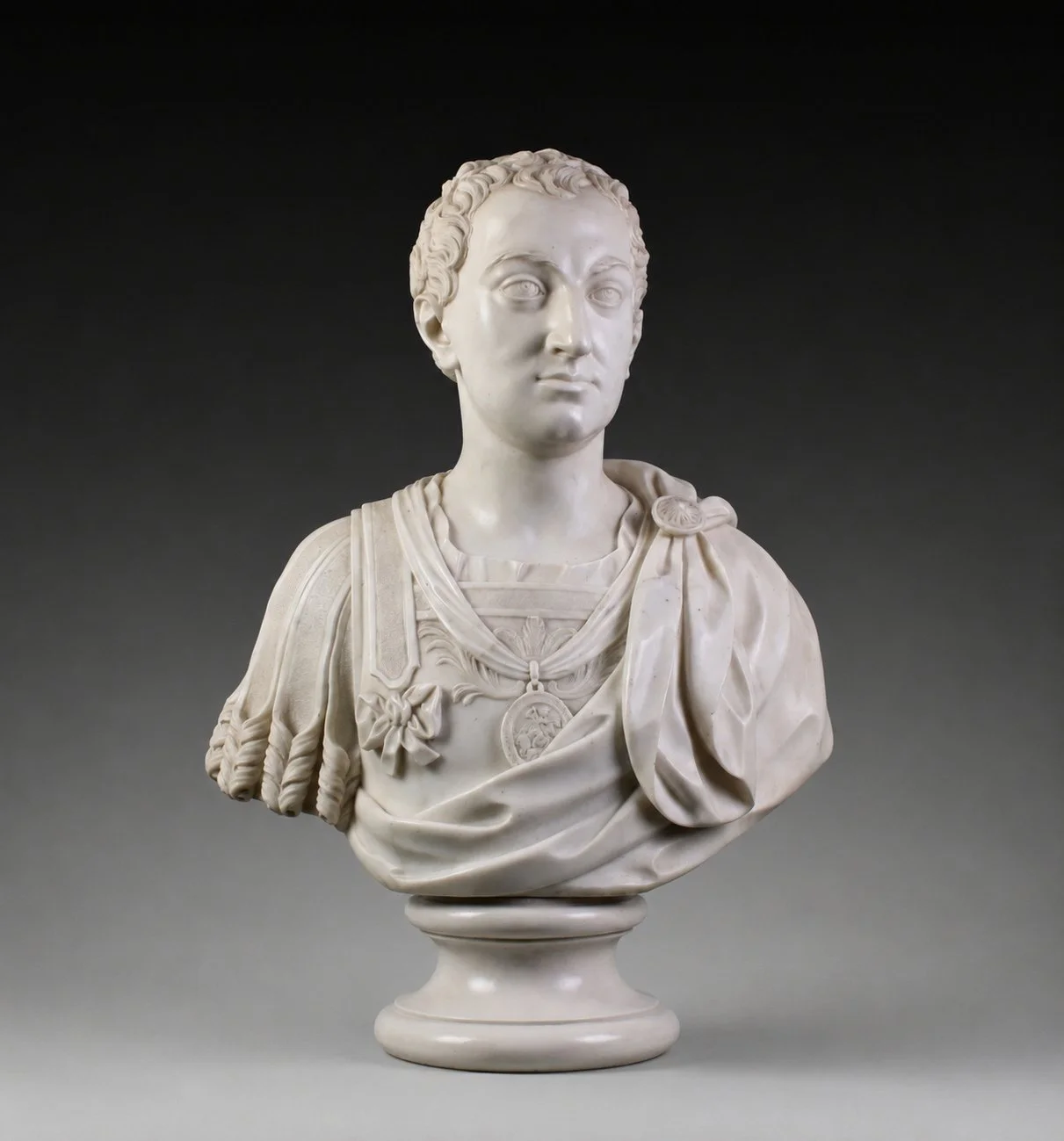
Fig. 1: Attributed to Peter Scheemakers (Antwerp 1691-1781 Antwerp), Frederick, Prince of Wales (1707-1751), circa 1740. Marble, on a composite socle. 58 cm. high (the bust), 69 cm. high incl. socle
The present bust can be confidently attributed to the important Anglo-Flemish sculptor, Peter Scheemakers (1691-1781), who carved another bust of Frederick, now in the Royal Collection (inv. no. RCIN 31169), which appears to derive from the same model as the present portrait.
The Royal Collection example was commissioned by Viscount Cobham for his Temple of Friendship at Stowe and was executed in 1741 by Scheemakers, who also carved busts of Lord Cobham himself (Victoria and Albert Museum) and Philip Stanhope, 4th Earl of Chesterfield (Huntingdon Art Museum, USA, fig. 2) for the Temple.
The present bust’s close formal affinity with the Royal Collection version supports a dating in the 1740s. Both busts are comparable in terms of the dress, pose and facial characteristics. In the Royal Collection bust, however, elaborate etching is applied to the cuirass, whereas in the present work the cuirass is lightly hammered. In the present bust the Lesser George medal is also partially obscured behind the drapery, like on Scheemakers's bust of the Earl of Chesterfield (see fig. 2).
Slight differences also include the inscription of the motto ('Honi soit qui mal y pense') around the Lesser George badge, which is not apparent in the Royal Collection bust. Another slight deviation in the present bust is the acanthus motif, introduced around the badge.
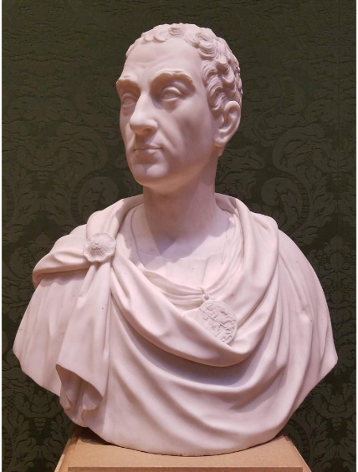
Fig. 2: Peter Scheemakers (1691-1781), Philip Stanhope, 4th Earl of Chesterfield, 1742. Marble 63.5 cm. high. Huntingdon Art Museum, USA, Obj. No. 92.6
The provenance of the present bust, coming from Gillingham Hall, Norfolk, suggests that it likely descended in the family of its present owners from Francis Matthew Schutz (1729-1779), third cousin of Prince Frederick and son of Baron Augustus Schutz, who was Master of the Robes to King George II.
In 1755, Francis Schutz married Susan Bacon of Gillingham Hall, Norfolk, where the bust is definitely recorded in an inventory of the mid-nineteenth century. This suggests the bust may have been acquired by Francis Matthew Schutz and moved to Gillingham Hall at an earlier date, probably in the 1750s.
The rarity of the present bust (no other versions are known beyond this and the Royal Collection example) underscores its significance both within Scheemakers’s oeuvre and within the broader narrative of Hanoverian portrait sculpture.