
This post is an excerpt from Sam’s blog; to read the full post, click here: https://samporterart.wordpress.com/2026/05/11/zuburan-at-the-national-gallery-london/
Zuburàn. The name alone conjures up the image of some mysterious character – perhaps a swashbuckling knight or conjurer – in a medieval romance set in Reconquista Spain. Yet in many ways, Zuburàn the painter is also an enigma, one whose biographical details are patchy and whose personality can only really be conjectured at through deciphering his paintings, which are themselves mysterious.
This exhibition at the National Gallery – the first major exhibition of the artist in the UK – boldly states at the outset its attempt to create a clearer image of the painter and his personality for the audience, through interpreting his paintings and their possible meanings, rather than relying on the few scant contemporary documents referring to the artist.
Francisco de Zuburàn (1598-1664) is often called the “Spanish Caravaggio”. Although there is no evidence that Zurburàn ever travelled to Italy and saw works first-hand by the Baroque master, it is obvious that his dramatic, tenebrist style was influenced by other Spanish Caravaggist painters working in Spain in the early seventeenth century. One of the few facts that we do know about Zuburàn’s early life is that his father was a haberdasher in his home town in Extremadura, in central western Spain, which explains his gift for painting drapery, ornament and colour. When Zuburàn moved south to Seville at the age of sixteen, we also know that that he was apprenticed to a wood carver and sculptor, which clearly taught him the importance of volume and the human form.
These early influences on the young artist are alluded to it in the first room of the exhibition, which features the earliest signed painting by Zuburàn, his Crucifixion from the Art Institute of Chicago (1627, below). According to an eighteenth-century writer, everyone who encountered this painting from afar, in a dimly-lit sacristry in Seville, thought it was a sculpture at first, due to its monochrome colour and plastic forms accentuated by the dramatic chiaroscuro. The first room also draws attention to Zuburàn’s careful study of drapery and colour, likely learned from a young age in his father’s haberdashery.
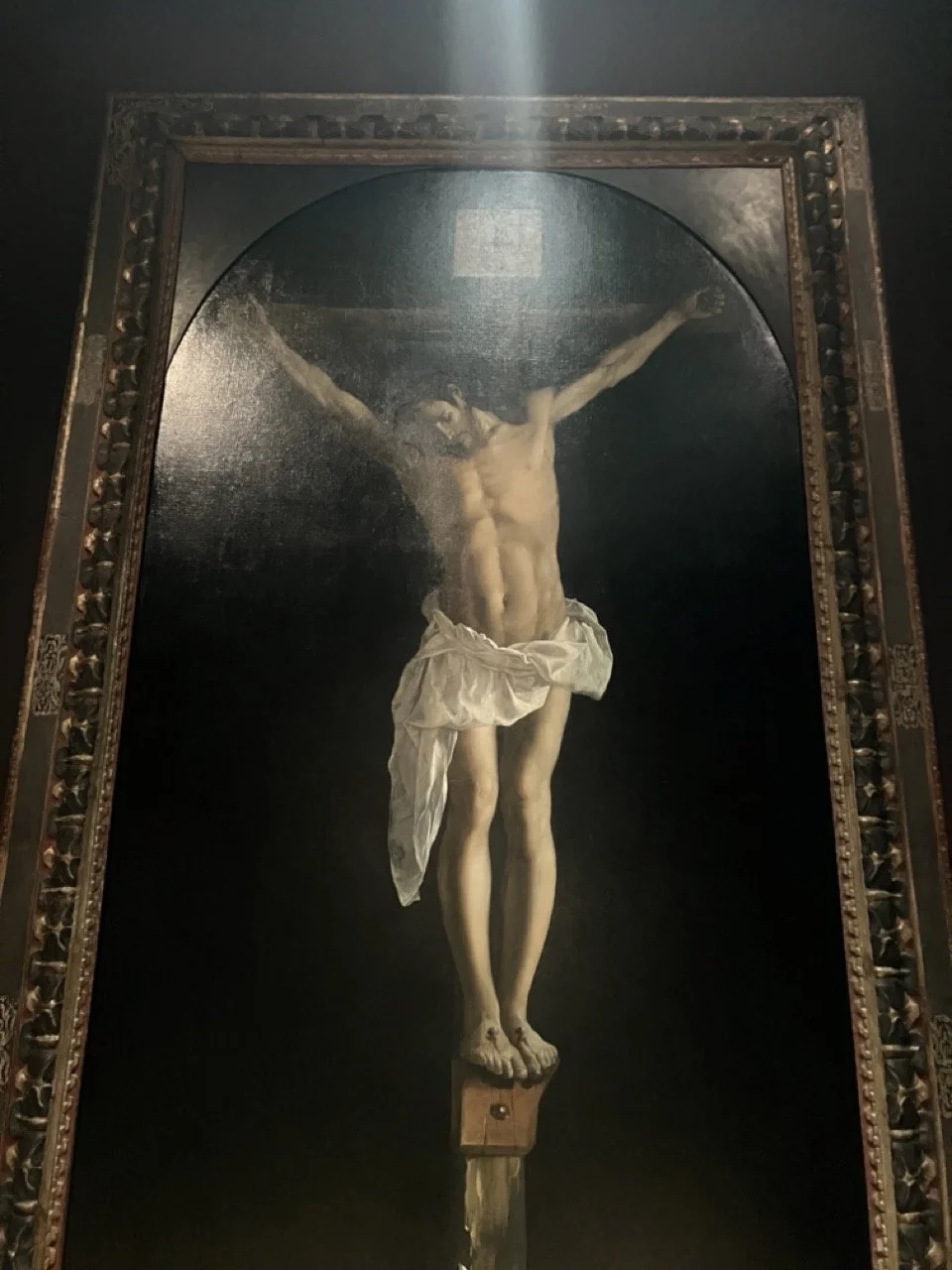
The remainder of the rooms in the exhibition are ordered loosely by the different genres and types of patrons Zuburàn worked for during his career in Seville and, later on, in Madrid. These included large paintings commissioned by church orders in Seville, based on traditional Christian themes such as the Immaculate Conception (highly popular in Counter-Reformation Spain), Crucifixions and Biblical narratives, as well as more intimate pictures of female saints or secular portraits made for private clients.
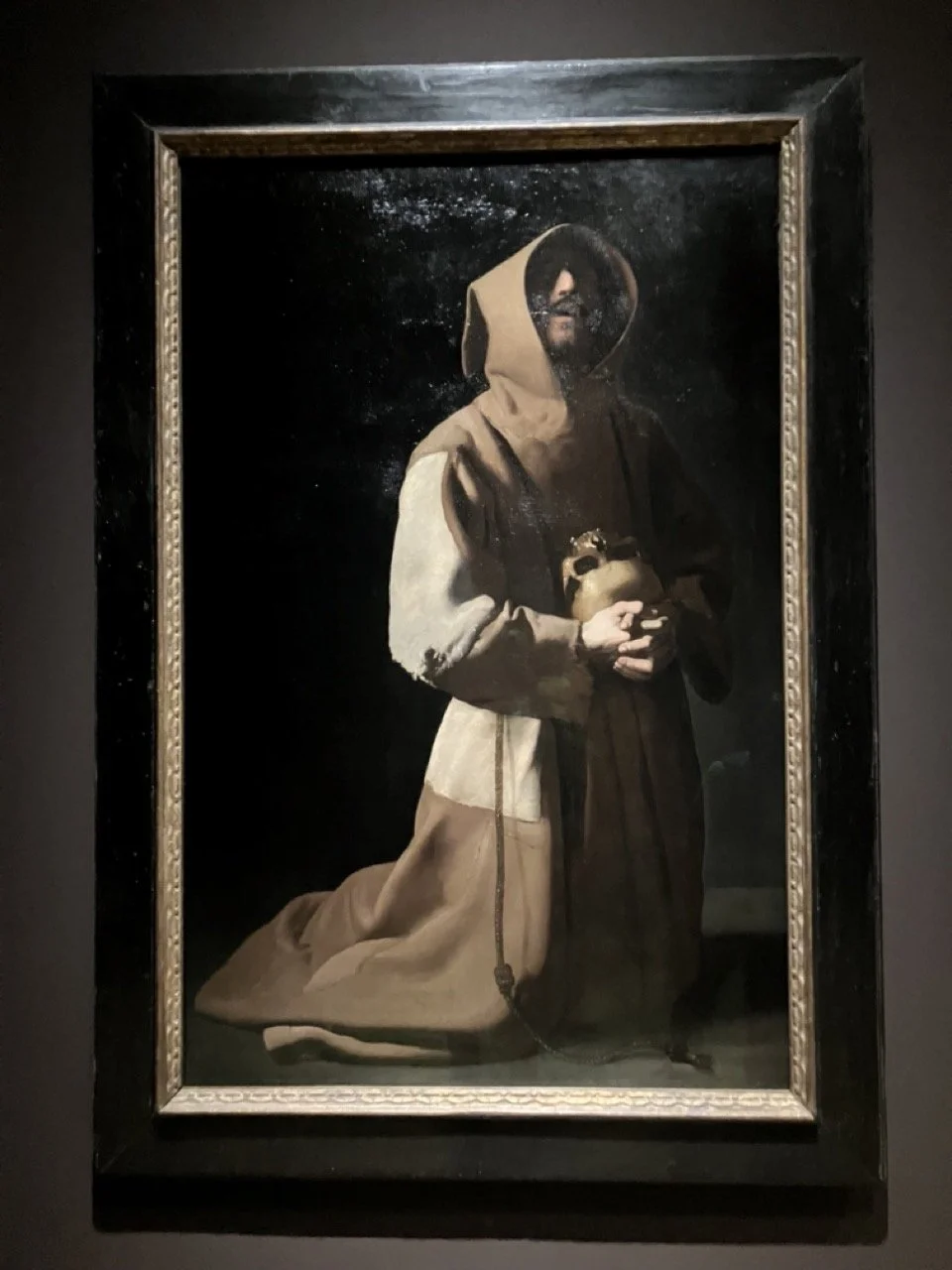
Zuburàn’s most powerful paintings, however, are his simplest ones, such as his famous painting in the National Gallery of Saint Francis in Meditation (1635-39, below), which depicts a dramatically spot-lit saint looking up to the Heavens as he kneels on the floor with a skull in his hands, his mouth agape. A similar painting of Saint Francis from the Museum of Fine Arts Lyon (1631-40) also captures the monochrome intensity of Zuburàn’s art.
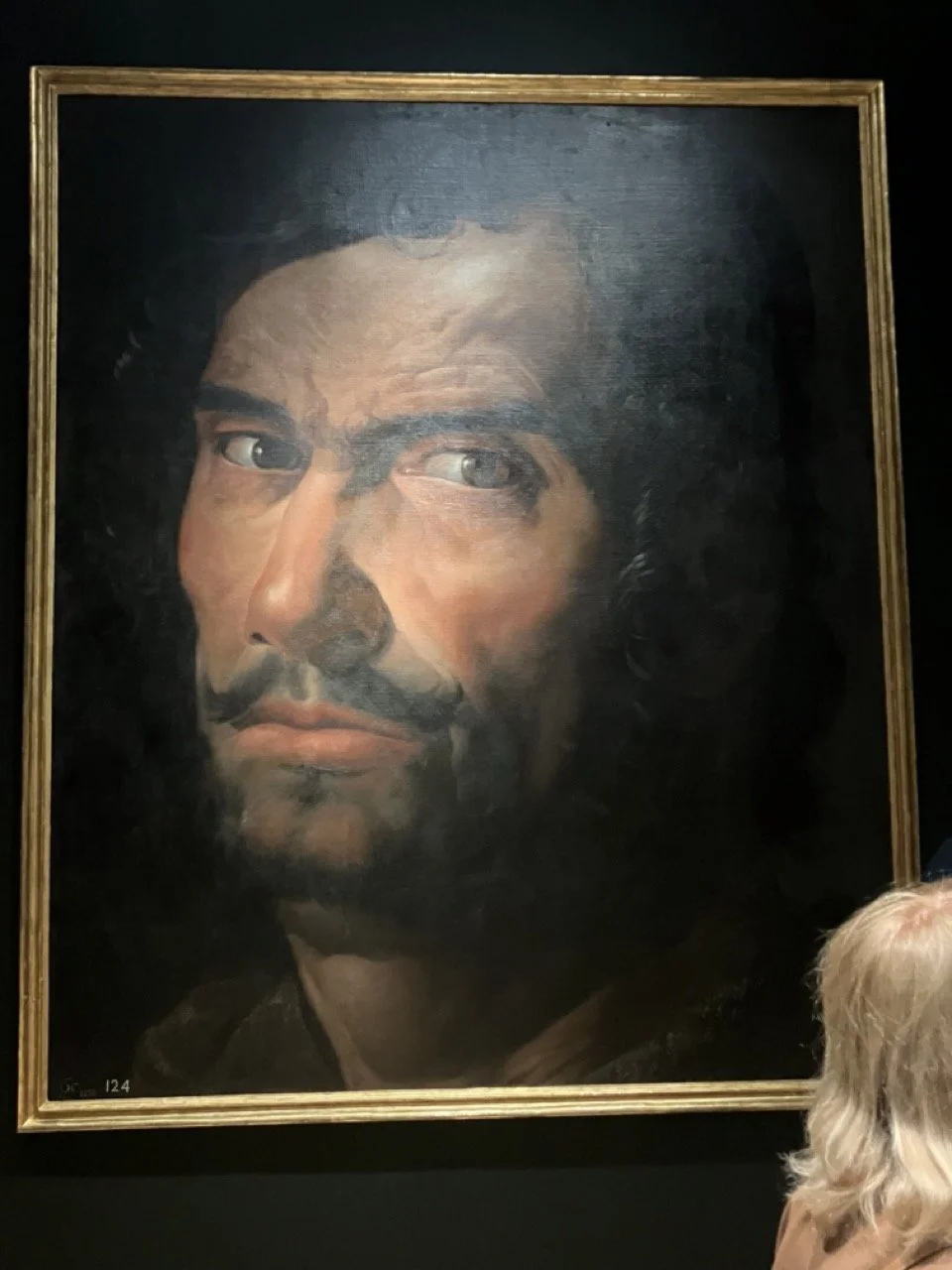
Another interesting picture which caught my attention – along with many of the other visitors to the exhibition in its busy opening week – was a colossal head of an unknown man, possibly a giant (c. 1635, below), which originally hung in the Buen Retiro Palace in Madrid and has only recently been tentatively attributed to Zuburàn. Its monumental size makes it almost unique in Baroque art and little is known about its subject matter or commissioning. In my opinion, it is more likely to be a portrait of an important Spanish military hero or aristocrat, rather than a giant.
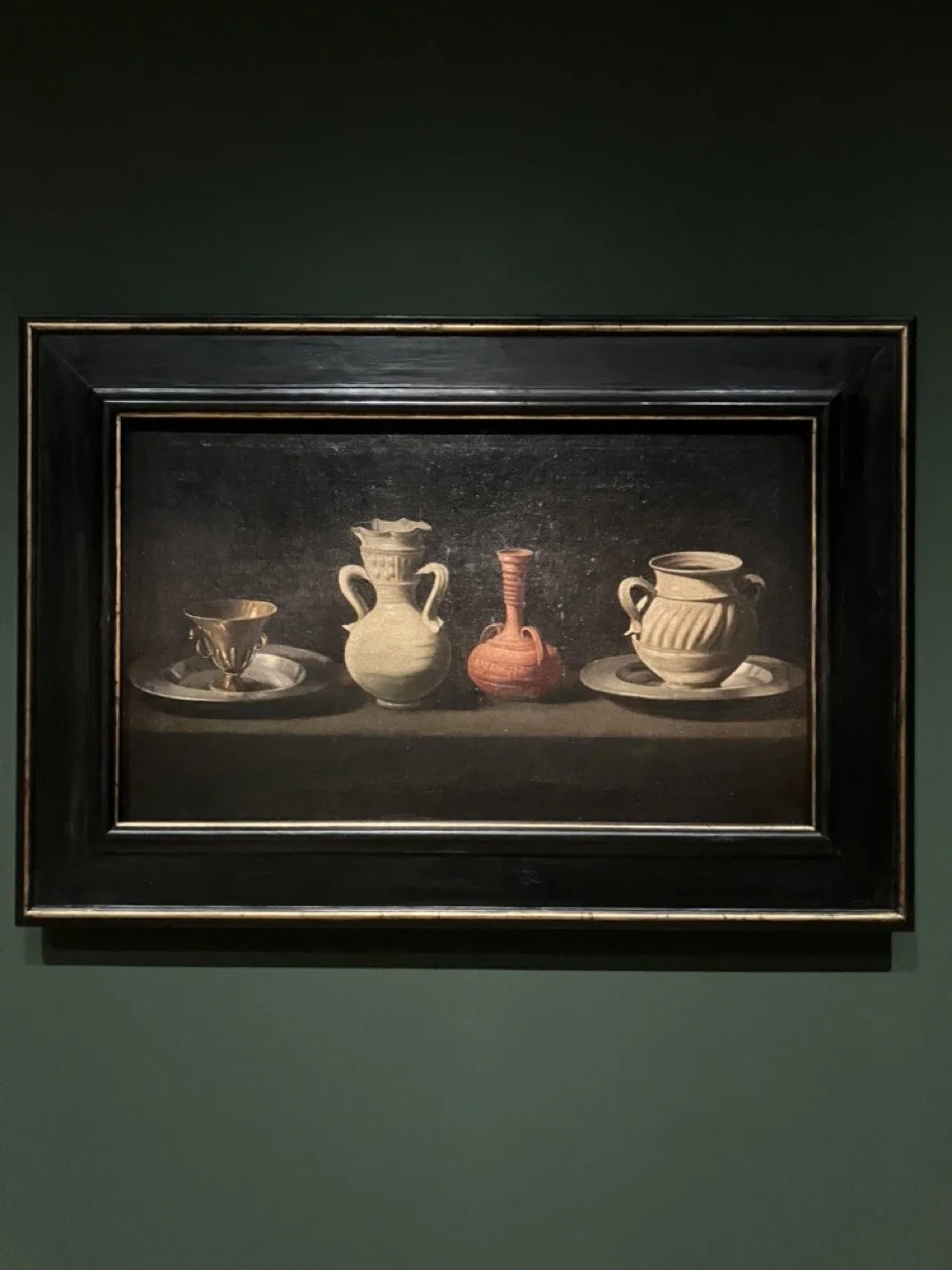
The next room focusses on the still lifes painted by Francisco and his son, Juan de Zuburàn (1620-49), who tragically died in his twenties of the Plague, which ravaged Seville in 1649. Only ten still lifes by Francisco are known but they are some of his most treasured pictures and as a genre they are particularly suited to his intense, subtle art of light and texture. His famous Still Life with Lemons, Oranges and a Rose (1633) from the Norton Simon museum is his most famous example, but my favourite was his Still Life with Four Vessels (c. 1650, below), which captures the beauty and form of four simple ceramic and silver pitchers and cups.
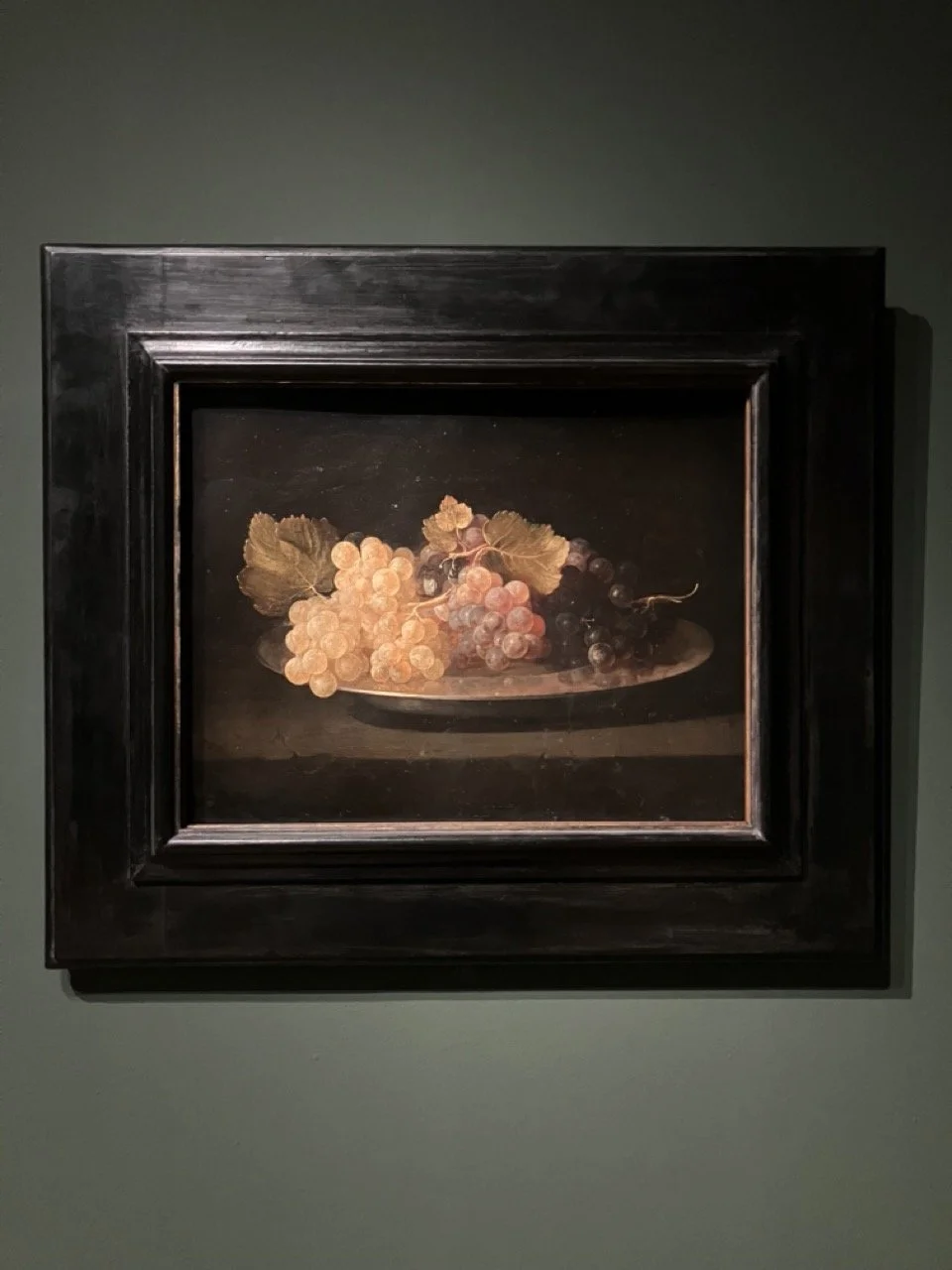
Juan’s still lifes are equally powerful and show a deep understanding of his father’s intense tenebrist style, clearly learnt from his time working in his father’s workshop. Juan would go on to start a successful but short-lived career in Seville specialising in still lifes, which demonstrate his skill at this genre. I particularly liked his small study of grapes (below).
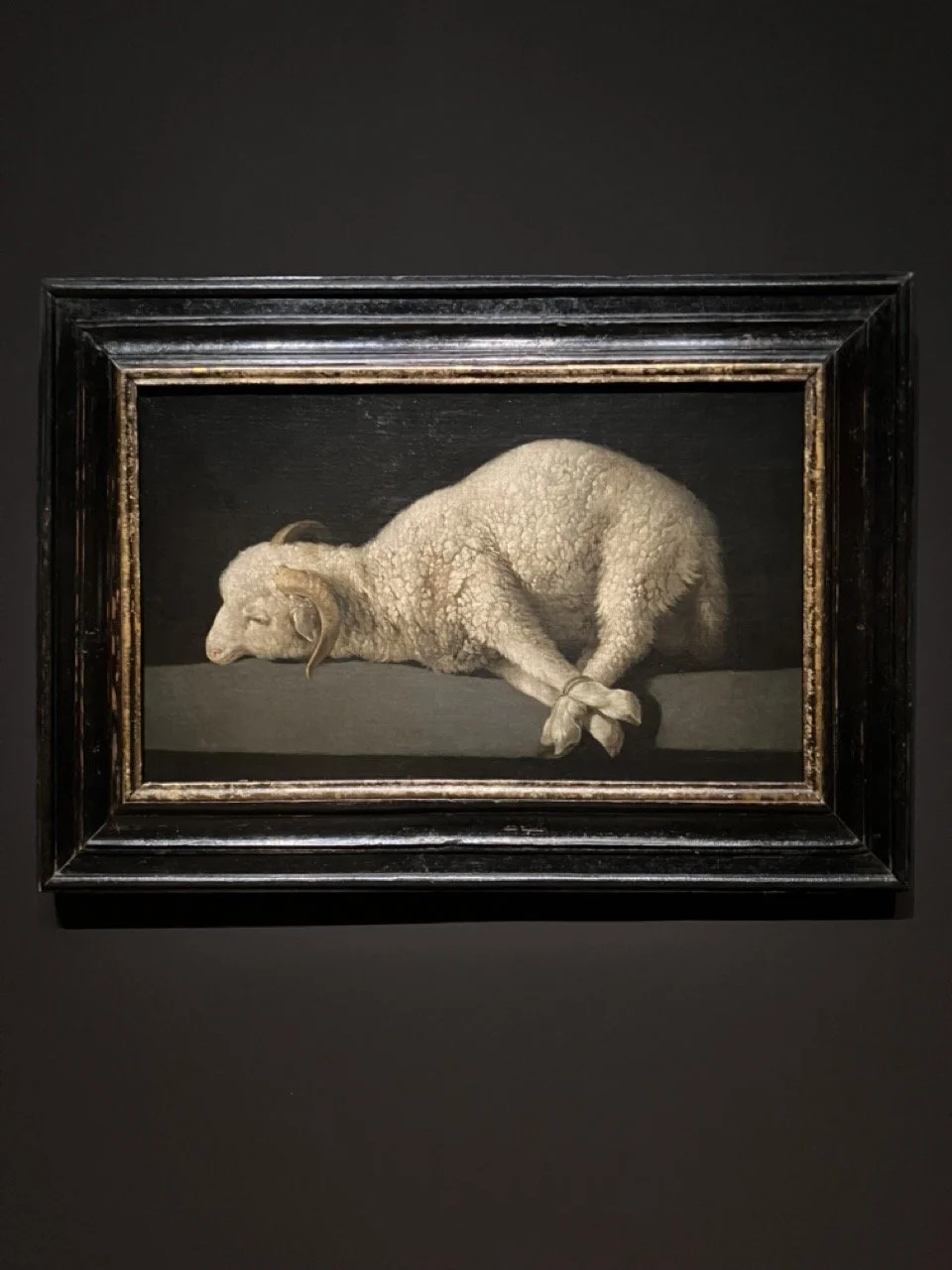
The final room of the exhibition includes Zuburàn’s famous painting of a young lamb on a stone ledge awaiting slaughter, called Agnus Dei (“Lamb of God”), painted c. 1635-40 and now in the Prado (pictured below). It is a fitting and powerful ending to the exhibition, considering the tragedy of Zuburàn’s own sacrifice to the Plague.
In the end, therefore, it is the power and intensity of Zuburàn’s art – the abstracted, monochrome tenebrism he developed, second-hand, from Caravaggio – that left the strongest impression on me. Whilst it seems obvious that Zuburàn was a religious man (as almost all men of his time in Spain were), it is clear that he also had a poetic feeling for capturing the power of a moment; whether it was a moment of religious ecstasy from Christian tradition or the delicate and fugitive beauty of a table of ceramic ware and fruit.