After Antonio Canova (Possagno, 1757–1822, Venice)
Dancing Girl with her Finger on her Chin
Italian, 19th century
Marble, 83 cm. / 32 5/8 ins high
PROVENANCE:
Private collection, West of England
COMPARATIVE WORKS:
Sotheby’s, London, 14 Dec 2022, lot 23 (sold £16,380 incl. fees)
Antonio Canova is regarded as the greatest Neoclassical sculptor and, in his day, he was probably the most famous artist in Europe. Canova’s oeuvre was deeply affected by his study of antique sculpture, yet his uniquely eroticised mythology, extreme fineness of carving and high finish were to influence a whole generation of artists.
Dancing female figures were a theme Canova explored with some frequency during his career. They were clearly inspired by classical examples, particularly the archaicising bronzes being unearthed during his lifetime at Pompeii and Herculaneum, such as the bronze Dancers from the Villa dei Papyri, Herculaneum (fig. 1, see Mattusch, op. cit.). Between 1806 and 1812 Canova created three different compositions based on this theme, each named after their particular gesture: Dancing Girl with Her Hands on Her Hips, Dancing Girl with Her Finger on Her Chin and Dancing Girl with Cymbals.
The present figure of a Dancing Girl with Her Finger on Her Chin is a fine nineteenth century marble copy of the model Canova created in plaster in 1809 (Museo Gypsotheca Antonio Canova, Possagno), which was commissioned in marble for the Italian banker Domenico Manzoni di Forli, who paid 4,400 scudi (a huge sum, equivalent to approximately £1,000 at that time). After Forli’s death, the marble Dancing Girl was sold for 5,000 scudi to the Russian ambassador in Rome, Count Gurief. Today the work is housed in the collection of the Galleria Nazionale d’Arte Antica, Rome.
In the present marble, the quality of the carving is evident in the typically soft, Canova-esque facial features and the delicate rendering of her right finger lightly touching her chin. There is also fine attention-to-detail in the carving of the twisting locks of hair, the wreath of flowers around her left wrist and the cymbals dangling on the tree root to reverse, which is carved with naturalistic striations imitating bark. Above all the finely rendered and complex folds of drapery on the classical tunic worn by the Dancing Girl, heavily undercut to form fluting tubes on the reverse and clearly imitating Classical Greek examples, are characteristic of a highly-skilled Italian workshop operating in the mid-nineteenth century.
For a nineteenth-century copy of the Dancing Girl of similar proportions, albeit with less fine rendering of the drapery and other details (the cymbals at the back, for instance, are missing), see the figure from the Tadolini workshop, Rome, dated 1872 (Sotheby’s, London, 14 Dec 2022, lot 23, sold £16,380 incl. fees).[1]
Price: £8,500
Please click here to enquire
RELATED LITERATURE:
Carol C. Mattusch, The Villa dei Papiri at Herculaneum: Life and Afterlife of a Sculpture Collection. Los Angeles, 2005, pp. 195-215; G. Pavanello, L’opera completa del Canova, Milan, 1976, no. 230; E. Roscoe, Hardy and M. G. Sullivan, A Biographical Dictionary of Sculptors in Britain 1660-1851, London, 2009, pp. 187-190
[1] For images, see Sotheby’s website: https://www.sothebys.com/en/buy/auction/2022/19th-20th-century-sculpture-3/dancer
After Antonio Canova (Possagno, 1757–1822, Venice)
Dancing Girl with her Finger on her Chin
Italian, 19th century
Marble, 83 cm. / 32 5/8 ins high
PROVENANCE:
Private collection, West of England
COMPARATIVE WORKS:
Sotheby’s, London, 14 Dec 2022, lot 23 (sold £16,380 incl. fees)
Antonio Canova is regarded as the greatest Neoclassical sculptor and, in his day, he was probably the most famous artist in Europe. Canova’s oeuvre was deeply affected by his study of antique sculpture, yet his uniquely eroticised mythology, extreme fineness of carving and high finish were to influence a whole generation of artists.
Dancing female figures were a theme Canova explored with some frequency during his career. They were clearly inspired by classical examples, particularly the archaicising bronzes being unearthed during his lifetime at Pompeii and Herculaneum, such as the bronze Dancers from the Villa dei Papyri, Herculaneum (fig. 1, see Mattusch, op. cit.). Between 1806 and 1812 Canova created three different compositions based on this theme, each named after their particular gesture: Dancing Girl with Her Hands on Her Hips, Dancing Girl with Her Finger on Her Chin and Dancing Girl with Cymbals.
The present figure of a Dancing Girl with Her Finger on Her Chin is a fine nineteenth century marble copy of the model Canova created in plaster in 1809 (Museo Gypsotheca Antonio Canova, Possagno), which was commissioned in marble for the Italian banker Domenico Manzoni di Forli, who paid 4,400 scudi (a huge sum, equivalent to approximately £1,000 at that time). After Forli’s death, the marble Dancing Girl was sold for 5,000 scudi to the Russian ambassador in Rome, Count Gurief. Today the work is housed in the collection of the Galleria Nazionale d’Arte Antica, Rome.
In the present marble, the quality of the carving is evident in the typically soft, Canova-esque facial features and the delicate rendering of her right finger lightly touching her chin. There is also fine attention-to-detail in the carving of the twisting locks of hair, the wreath of flowers around her left wrist and the cymbals dangling on the tree root to reverse, which is carved with naturalistic striations imitating bark. Above all the finely rendered and complex folds of drapery on the classical tunic worn by the Dancing Girl, heavily undercut to form fluting tubes on the reverse and clearly imitating Classical Greek examples, are characteristic of a highly-skilled Italian workshop operating in the mid-nineteenth century.
For a nineteenth-century copy of the Dancing Girl of similar proportions, albeit with less fine rendering of the drapery and other details (the cymbals at the back, for instance, are missing), see the figure from the Tadolini workshop, Rome, dated 1872 (Sotheby’s, London, 14 Dec 2022, lot 23, sold £16,380 incl. fees).[1]
Price: £8,500
Please click here to enquire
RELATED LITERATURE:
Carol C. Mattusch, The Villa dei Papiri at Herculaneum: Life and Afterlife of a Sculpture Collection. Los Angeles, 2005, pp. 195-215; G. Pavanello, L’opera completa del Canova, Milan, 1976, no. 230; E. Roscoe, Hardy and M. G. Sullivan, A Biographical Dictionary of Sculptors in Britain 1660-1851, London, 2009, pp. 187-190
[1] For images, see Sotheby’s website: https://www.sothebys.com/en/buy/auction/2022/19th-20th-century-sculpture-3/dancer

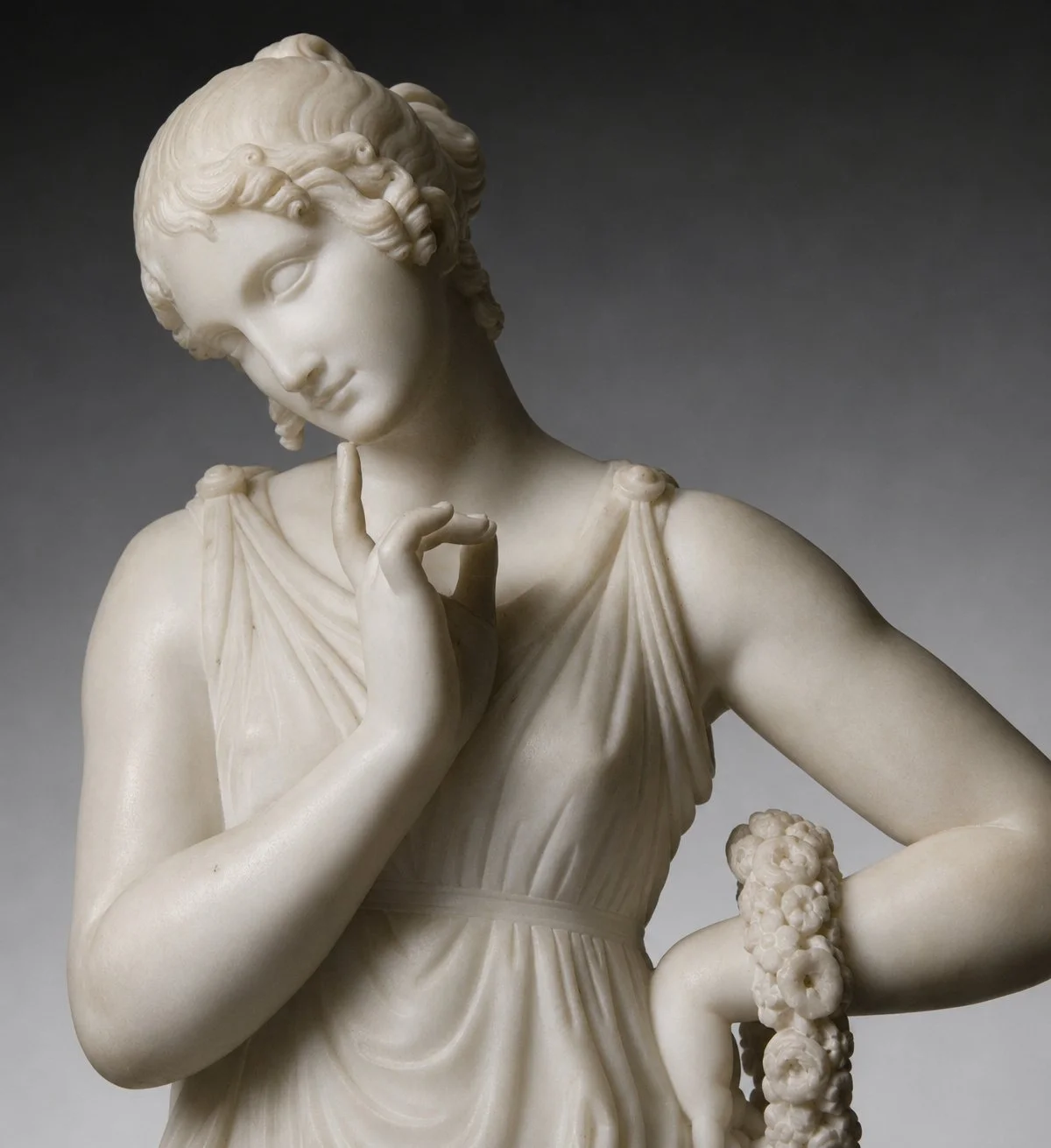 Image 1 of 6
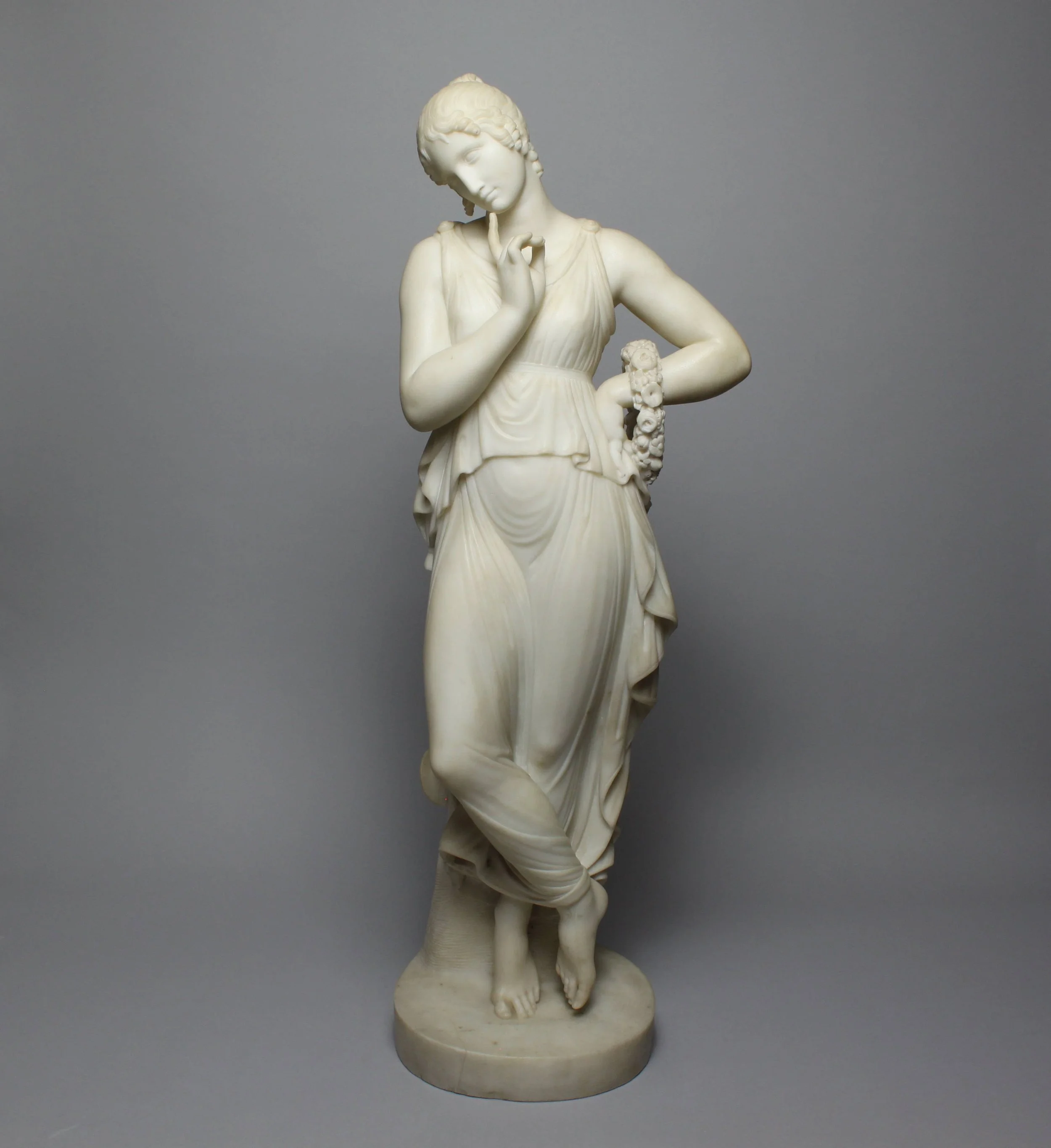 Image 2 of 6
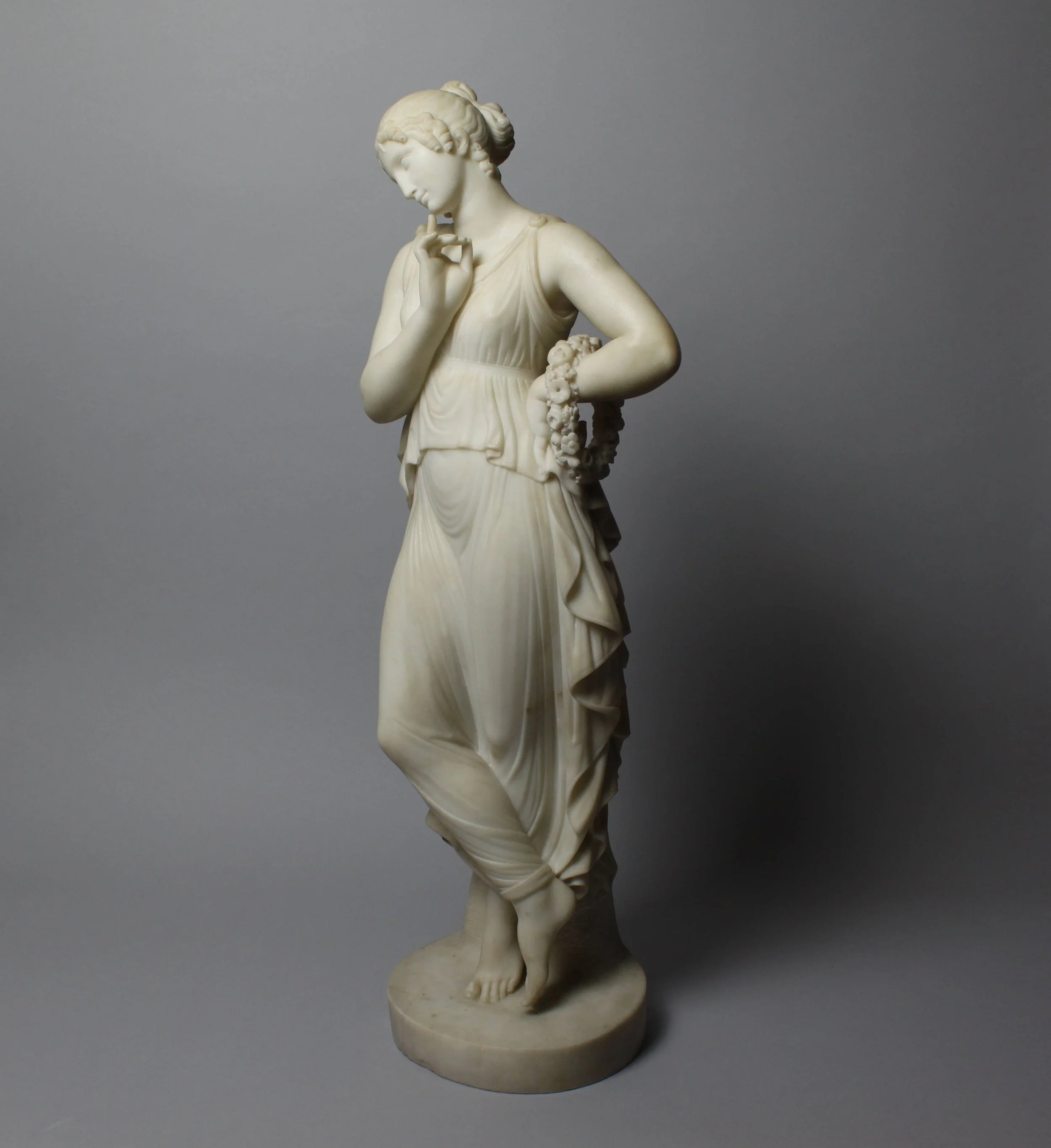 Image 3 of 6
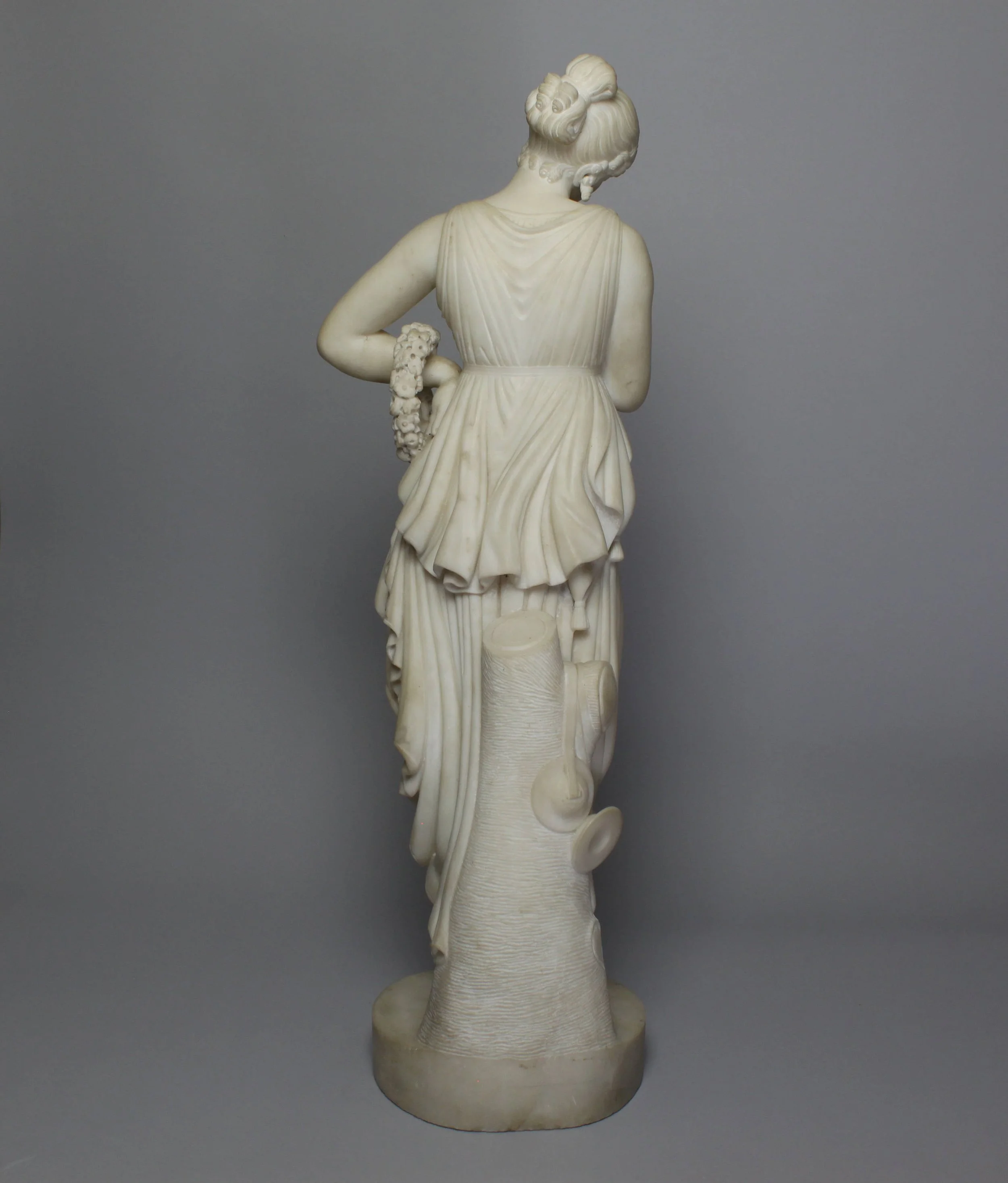 Image 4 of 6
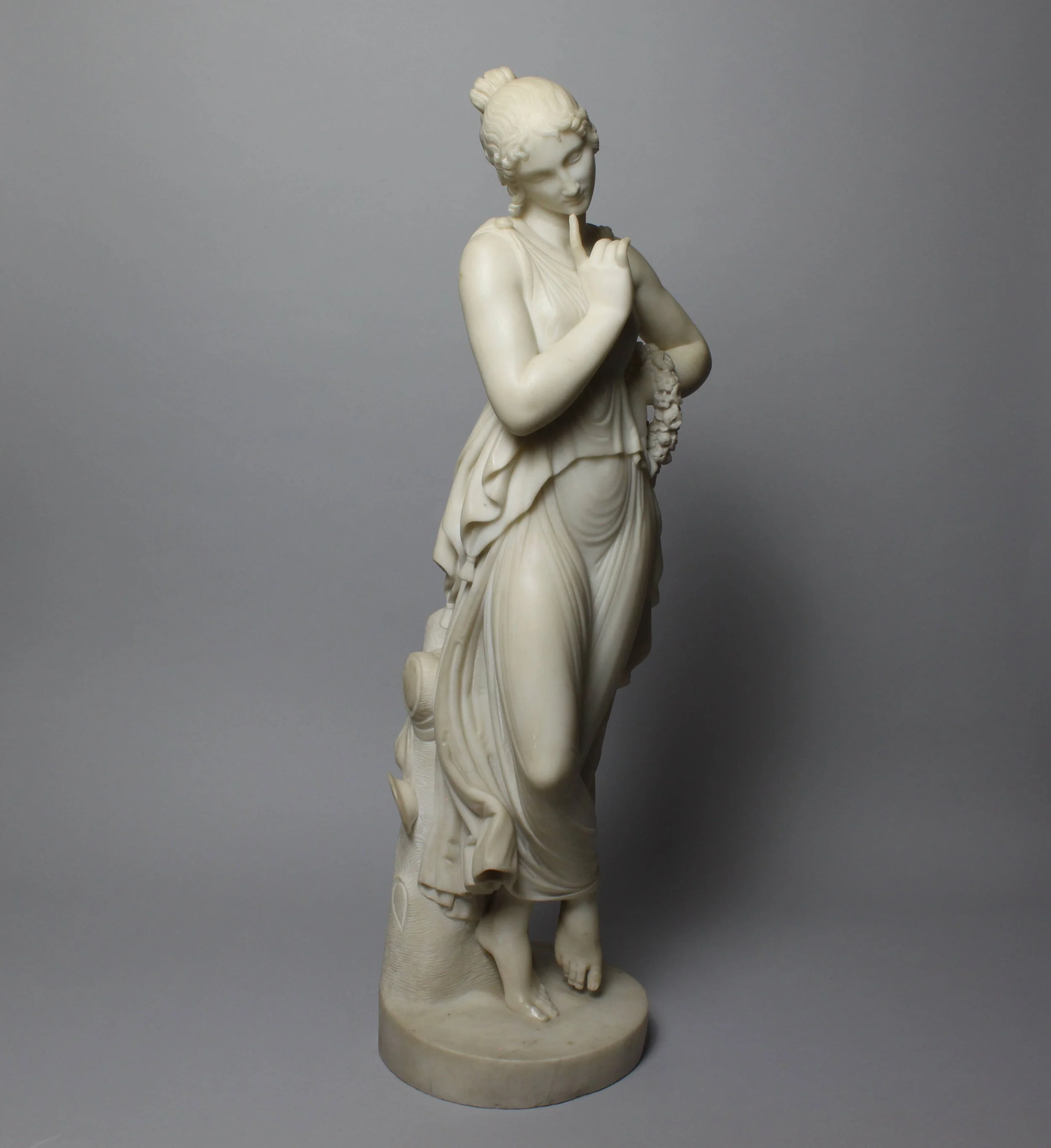 Image 5 of 6
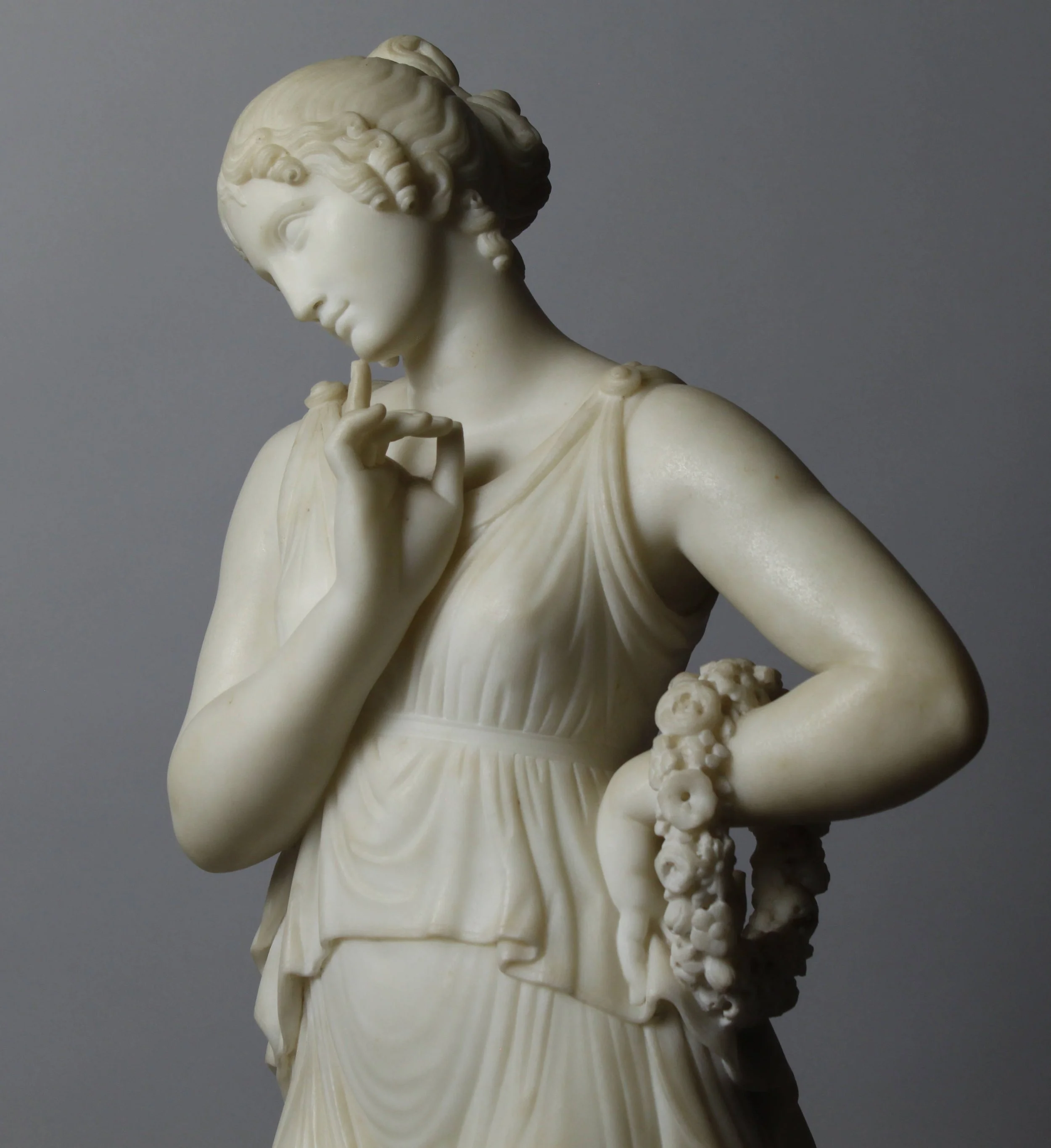 Image 6 of 6