Attributed to Peter Scheemakers (Antwerp, 1691-1781), circa 1740-50
The Lesser George inscribed: [H]ONI.SOIT.QUI.MAL.Y.[PENSE]
Marble, 58 cm. high (the bust), 69 cm. high incl. socle
PROVENANCE:
[Probably] Francis Matthew Schutz (1729-1779), at Gillingham Hall, Norfolk (recorded in an inventory of the house by 1853 as ‘Marble bust of Frederick Lewis, Prince of Wales’); thence by descent
This marble bust of Frederick, Prince of Wales, is an important exemplar of eighteenth-century British portrait sculpture. It can be confidently attributed to the Flemish sculptor Peter Scheemakers (1691-1781), who was part of a trio of pre-eminent Continental sculptors working in Britain in the mid-eighteenth century.
Scheemakers was born in Antwerp and trained in his father’s workshop before establishing a successful practice in London, where he quickly became a rival of two other Continental émigré sculptors: John Michael Rysbrack and Louis-François Roubiliac. After a period in Rome in the late 1720s, during which he consolidated his study of classical art, Scheemakers returned to England and executed a wide range of portrait busts, funerary monuments, chimneypieces and statuary. His most celebrated work is the monument to William Shakespeare erected in Westminster Abbey in 1741, after designs by William Kent.
The present bust represents Frederick, Prince of Wales (1707–1751), eldest son of King George II and father of King George III. Born and raised in Hanover in the Holy Roman Empire, Frederick moved to England in 1727 after the accession of his father to the throne and was created Prince of Wales in 1729. Although Frederick predeceased his father and never acceded to the throne, he was one of the most cultivated and discerning patrons of the arts in early Georgian Britain, amassing collections and commissioning works from leading Rococo artists of his day, including Jacopo Amigoni, Jean-Baptiste van Loo and Philip Mercier. Frederick’s patronage of Scheemakers was longstanding: he previously commissioned a series of busts, including portraits of literary figures such as Dryden, Milton, Shakespeare and Spenser, from the sculptor for his residence at Carlton House and as gifts to friends such as Alexander Pope.[1]
Despite being German by birth, Frederick was the earliest Royal enthusiast and patron of the sport of cricket. By the time Frederick arrived in Great Britain in 1727, cricket had become the country’s most popular team sport. Keen to anglicise himself and fit into society, Frederick developed an interest in the game and soon became a genuine enthusiast. He initially placed wagers on matches, but before long he was also sponsoring teams and even playing the game himself.
Frederick’s death on 31 March 1751 dealt a significant blow to the game, coming soon after the death of Charles Lennox, 2nd Duke of Richmond, who was then the sport’s most important financial supporter. With the loss of these two leading patrons, the number of major matches declined for several years. Ironically, Frederick’s death was once attributed to a burst lung abscess caused by a blow from a cricket or real tennis ball. He was buried at Westminster Abbey on 13 April 1751 and remains the most recent Prince of Wales never to have become monarch.
The present sculpture is comparable to another bust of Frederick in the Royal Collection (inv. no. RCIN 31169), today at Windsor Castle, and appears to derive from the same model.[2] . The Royal Collection example was commissioned by Viscount Cobham for his Temple of Friendship at Stowe and was executed in 1741 by Scheemakers, who also carved busts of Lord Cobham himself (Victoria and Albert Museum, Mus. No. A.I.-1942) and Philip Stanhope, 4th Earl of Chesterfield (Huntingdon Art Museum, USA, Obj. No. 92.6) for the Temple. The present bust’s close formal affinity with the Royal Collection version supports a dating in the 1740s. Both busts are comparable in terms of the dress, pose and facial characteristics, particularly the pronounced eyebrows characteristic of Scheemakers’ portraiture.
In the Royal Collection bust, however, more elaborate etching is applied to the cuirass and the Lesser George badge lies upon the drapery without an inscribed edge, whereas in the present work the cuirass is lightly hammered and the Lesser George medal is partially obscured behind the drapery (like on the bust of the Earl of Chesterfield) and bears an additional border with the (partially) inscribed motto ‘Honi soit qui mal y pense’. Another slight deviation in this bust is the acanthus motif, which is introduced around the badge and underscores the sitter’s high status. The sharp carving of the hair in the present bust also differs slightly from the more shallow locks of hair in the Royal Collection bust of Frederick, but are closer to the rendering of the hair in the bust of the Earl of Chesterfield, where they are also quite sharply defined.[3]
The provenance of the present bust, coming from Gillingham Hall, Norfolk, suggests that it likely descended in the family of its present owners from Francis Matthew Schutz (1729-1779), third cousin of Prince Frederick and son of Baron Augustus Schutz, who was Master of the Robes to King George II. In 1755, Francis Schutz married Susan Bacon of Gillingham Hall, Norfolk, where the bust is recorded in an inventory of 1853. This suggests the bust may have been inherited or acquired by Francis Matthew Schutz and moved to Gillingham Hall in the 1750s.
The rarity of the present bust – no other versions are known beyond the Royal Collection example and the present work – underscores its significance both within Scheemakers’ oeuvre and within the broader narrative of Hanoverian portrait sculpture.
RELATED LITERATURE:
I. Roscoe, ‘Peter Scheemakers’, in The Volume of the Walpole Society, Vol. 61 (1999), pp. 163-304 I. Roscoe, Peter Scheemakers: The Famous Statuary, 1691-1781, exhibition catalogue, Leeds Art Gallery, October 1996 – January 1997; D. Bilbey and M. Trusted, British Sculpture 1470-2000, exhibition catalogue, London, Victoria and Albert Museum, 2002, pp. 146-50; I. Roscoe, E. Hardy and M. G. Sullivan, A Biographical Dictionary of Sculptors in Britain 1660-1851, London, 2009, pp. 1098-1107; J. Roberts, ed., Royal Treasures: A Golden Jubilee Celebration, exhibition catalogue, London, Queen’s Gallery, May 2002 – January 2003, p. 138-39, no. 67.
Please click here to enquire about this object
[1] For details of this commission, see Roscoe, ‘Peter Scheemakers’, in The Volume of the Walpole Society, Vol. 61 (1999), p. 266.
[2] For images of the Royal Collection bust, see Roberts, op. cit., and Royal Collection website: https://www.rct.uk/collection/31169/frederick-prince-of-wales
[3] For further images of the Earl of Chesterfield bust, see The Huntingdon Library website: https://emuseum.huntington.org/objects/6028/philip-stanhope-4th-earl-of-chesterfield
Attributed to Peter Scheemakers (Antwerp, 1691-1781), circa 1740-50
The Lesser George inscribed: [H]ONI.SOIT.QUI.MAL.Y.[PENSE]
Marble, 58 cm. high (the bust), 69 cm. high incl. socle
PROVENANCE:
[Probably] Francis Matthew Schutz (1729-1779), at Gillingham Hall, Norfolk (recorded in an inventory of the house by 1853 as ‘Marble bust of Frederick Lewis, Prince of Wales’); thence by descent
This marble bust of Frederick, Prince of Wales, is an important exemplar of eighteenth-century British portrait sculpture. It can be confidently attributed to the Flemish sculptor Peter Scheemakers (1691-1781), who was part of a trio of pre-eminent Continental sculptors working in Britain in the mid-eighteenth century.
Scheemakers was born in Antwerp and trained in his father’s workshop before establishing a successful practice in London, where he quickly became a rival of two other Continental émigré sculptors: John Michael Rysbrack and Louis-François Roubiliac. After a period in Rome in the late 1720s, during which he consolidated his study of classical art, Scheemakers returned to England and executed a wide range of portrait busts, funerary monuments, chimneypieces and statuary. His most celebrated work is the monument to William Shakespeare erected in Westminster Abbey in 1741, after designs by William Kent.
The present bust represents Frederick, Prince of Wales (1707–1751), eldest son of King George II and father of King George III. Born and raised in Hanover in the Holy Roman Empire, Frederick moved to England in 1727 after the accession of his father to the throne and was created Prince of Wales in 1729. Although Frederick predeceased his father and never acceded to the throne, he was one of the most cultivated and discerning patrons of the arts in early Georgian Britain, amassing collections and commissioning works from leading Rococo artists of his day, including Jacopo Amigoni, Jean-Baptiste van Loo and Philip Mercier. Frederick’s patronage of Scheemakers was longstanding: he previously commissioned a series of busts, including portraits of literary figures such as Dryden, Milton, Shakespeare and Spenser, from the sculptor for his residence at Carlton House and as gifts to friends such as Alexander Pope.[1]
Despite being German by birth, Frederick was the earliest Royal enthusiast and patron of the sport of cricket. By the time Frederick arrived in Great Britain in 1727, cricket had become the country’s most popular team sport. Keen to anglicise himself and fit into society, Frederick developed an interest in the game and soon became a genuine enthusiast. He initially placed wagers on matches, but before long he was also sponsoring teams and even playing the game himself.
Frederick’s death on 31 March 1751 dealt a significant blow to the game, coming soon after the death of Charles Lennox, 2nd Duke of Richmond, who was then the sport’s most important financial supporter. With the loss of these two leading patrons, the number of major matches declined for several years. Ironically, Frederick’s death was once attributed to a burst lung abscess caused by a blow from a cricket or real tennis ball. He was buried at Westminster Abbey on 13 April 1751 and remains the most recent Prince of Wales never to have become monarch.
The present sculpture is comparable to another bust of Frederick in the Royal Collection (inv. no. RCIN 31169), today at Windsor Castle, and appears to derive from the same model.[2] . The Royal Collection example was commissioned by Viscount Cobham for his Temple of Friendship at Stowe and was executed in 1741 by Scheemakers, who also carved busts of Lord Cobham himself (Victoria and Albert Museum, Mus. No. A.I.-1942) and Philip Stanhope, 4th Earl of Chesterfield (Huntingdon Art Museum, USA, Obj. No. 92.6) for the Temple. The present bust’s close formal affinity with the Royal Collection version supports a dating in the 1740s. Both busts are comparable in terms of the dress, pose and facial characteristics, particularly the pronounced eyebrows characteristic of Scheemakers’ portraiture.
In the Royal Collection bust, however, more elaborate etching is applied to the cuirass and the Lesser George badge lies upon the drapery without an inscribed edge, whereas in the present work the cuirass is lightly hammered and the Lesser George medal is partially obscured behind the drapery (like on the bust of the Earl of Chesterfield) and bears an additional border with the (partially) inscribed motto ‘Honi soit qui mal y pense’. Another slight deviation in this bust is the acanthus motif, which is introduced around the badge and underscores the sitter’s high status. The sharp carving of the hair in the present bust also differs slightly from the more shallow locks of hair in the Royal Collection bust of Frederick, but are closer to the rendering of the hair in the bust of the Earl of Chesterfield, where they are also quite sharply defined.[3]
The provenance of the present bust, coming from Gillingham Hall, Norfolk, suggests that it likely descended in the family of its present owners from Francis Matthew Schutz (1729-1779), third cousin of Prince Frederick and son of Baron Augustus Schutz, who was Master of the Robes to King George II. In 1755, Francis Schutz married Susan Bacon of Gillingham Hall, Norfolk, where the bust is recorded in an inventory of 1853. This suggests the bust may have been inherited or acquired by Francis Matthew Schutz and moved to Gillingham Hall in the 1750s.
The rarity of the present bust – no other versions are known beyond the Royal Collection example and the present work – underscores its significance both within Scheemakers’ oeuvre and within the broader narrative of Hanoverian portrait sculpture.
RELATED LITERATURE:
I. Roscoe, ‘Peter Scheemakers’, in The Volume of the Walpole Society, Vol. 61 (1999), pp. 163-304 I. Roscoe, Peter Scheemakers: The Famous Statuary, 1691-1781, exhibition catalogue, Leeds Art Gallery, October 1996 – January 1997; D. Bilbey and M. Trusted, British Sculpture 1470-2000, exhibition catalogue, London, Victoria and Albert Museum, 2002, pp. 146-50; I. Roscoe, E. Hardy and M. G. Sullivan, A Biographical Dictionary of Sculptors in Britain 1660-1851, London, 2009, pp. 1098-1107; J. Roberts, ed., Royal Treasures: A Golden Jubilee Celebration, exhibition catalogue, London, Queen’s Gallery, May 2002 – January 2003, p. 138-39, no. 67.
Please click here to enquire about this object
[1] For details of this commission, see Roscoe, ‘Peter Scheemakers’, in The Volume of the Walpole Society, Vol. 61 (1999), p. 266.
[2] For images of the Royal Collection bust, see Roberts, op. cit., and Royal Collection website: https://www.rct.uk/collection/31169/frederick-prince-of-wales
[3] For further images of the Earl of Chesterfield bust, see The Huntingdon Library website: https://emuseum.huntington.org/objects/6028/philip-stanhope-4th-earl-of-chesterfield

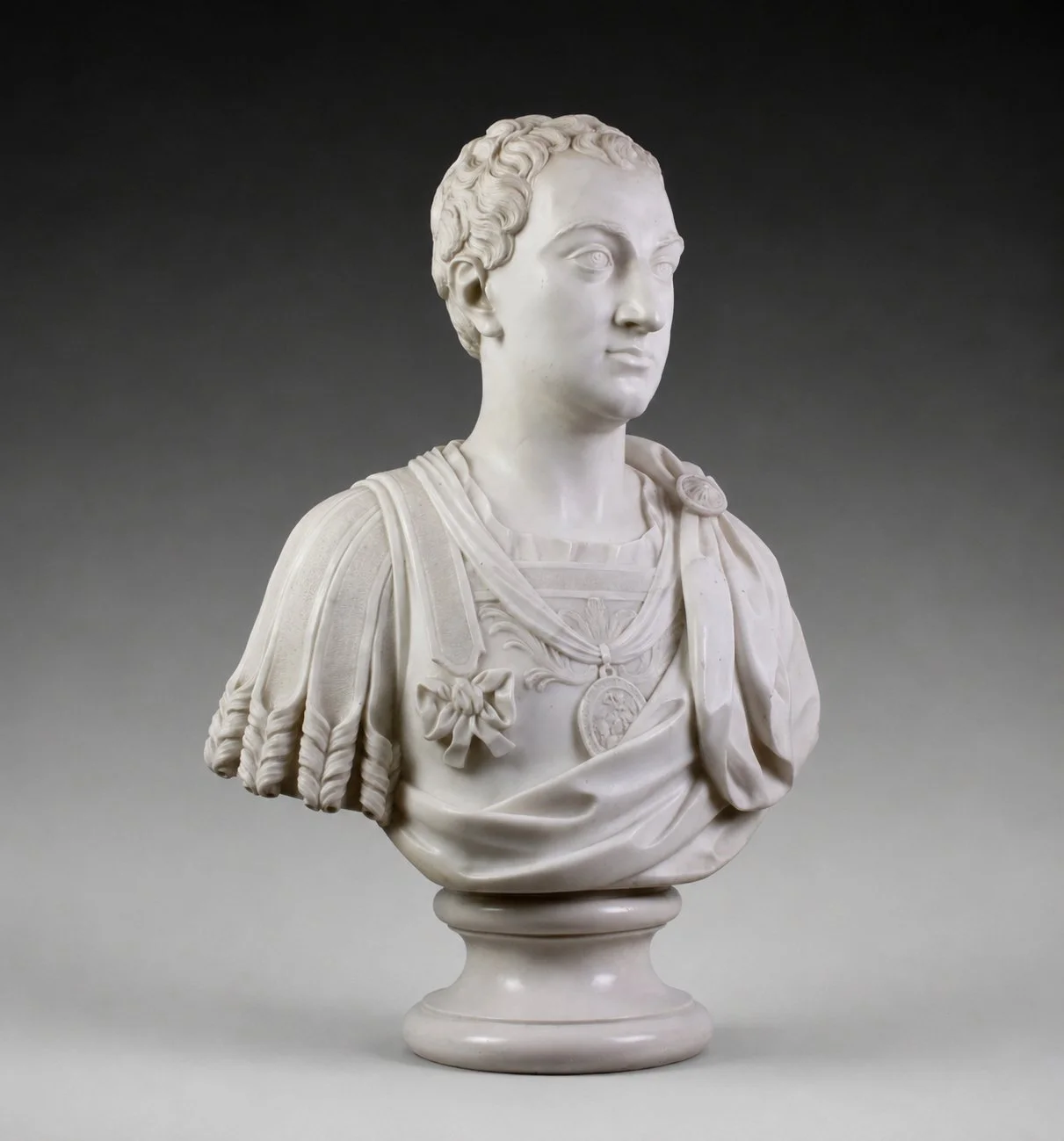 Image 1 of 7
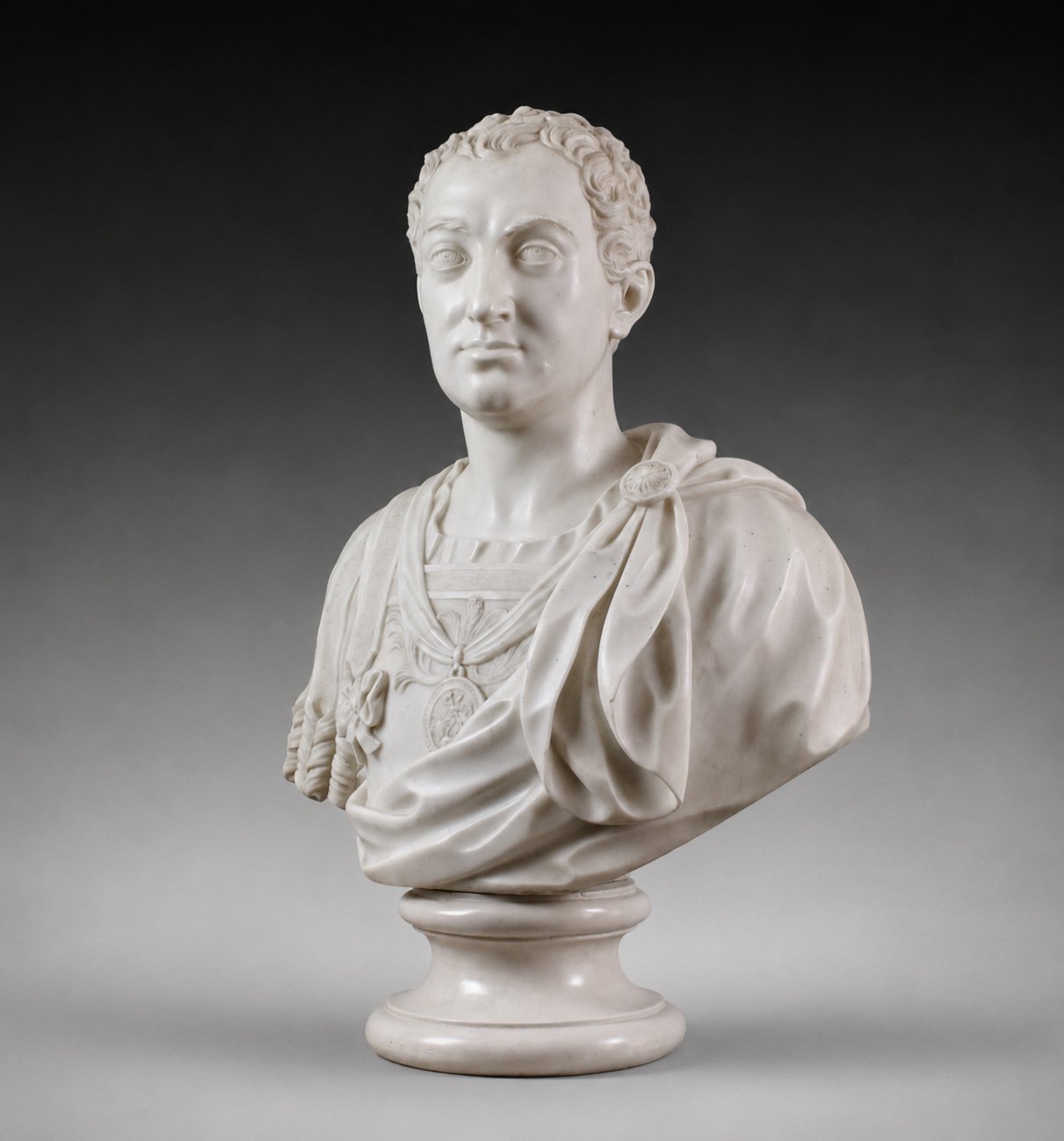 Image 2 of 7
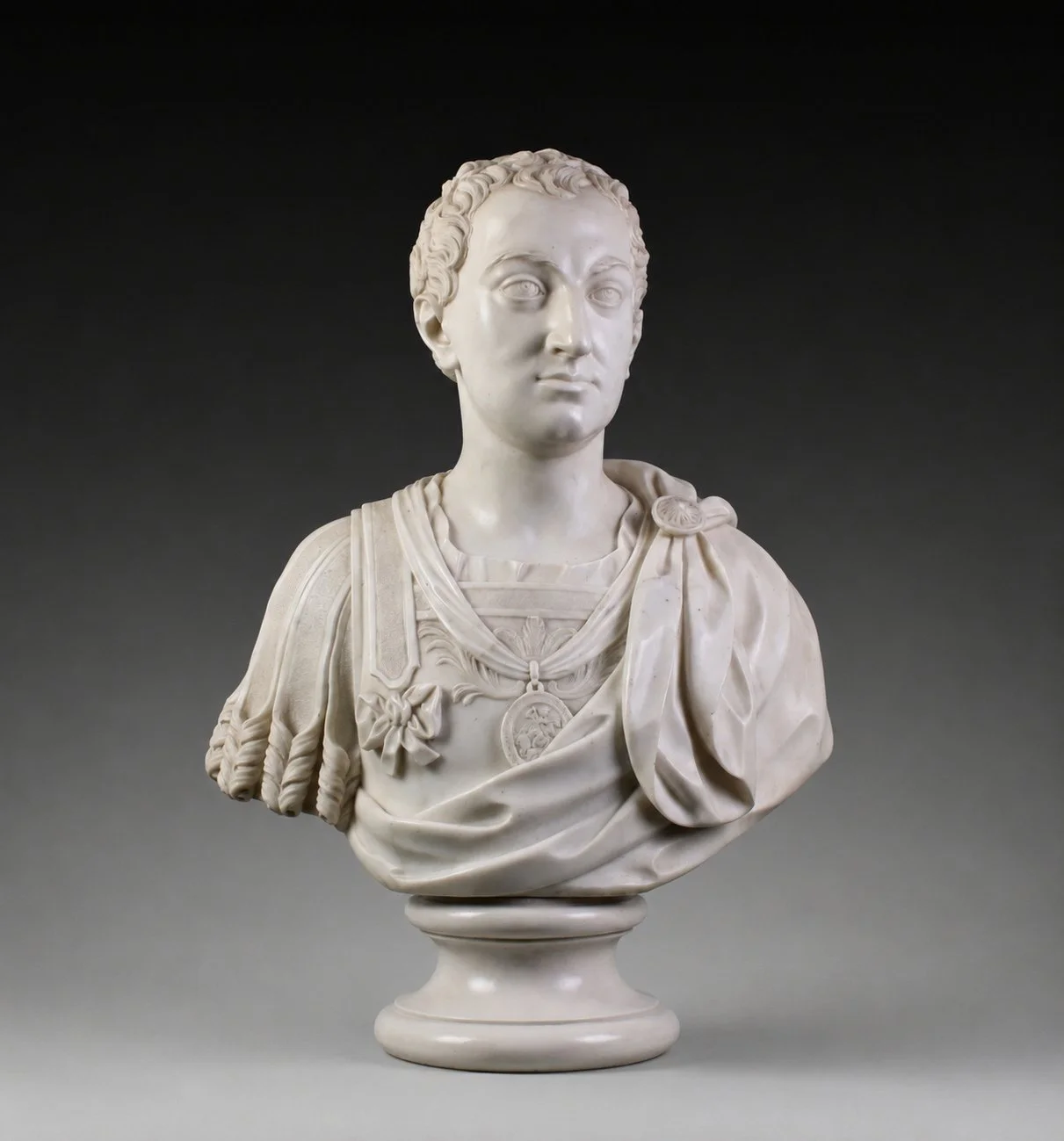 Image 3 of 7
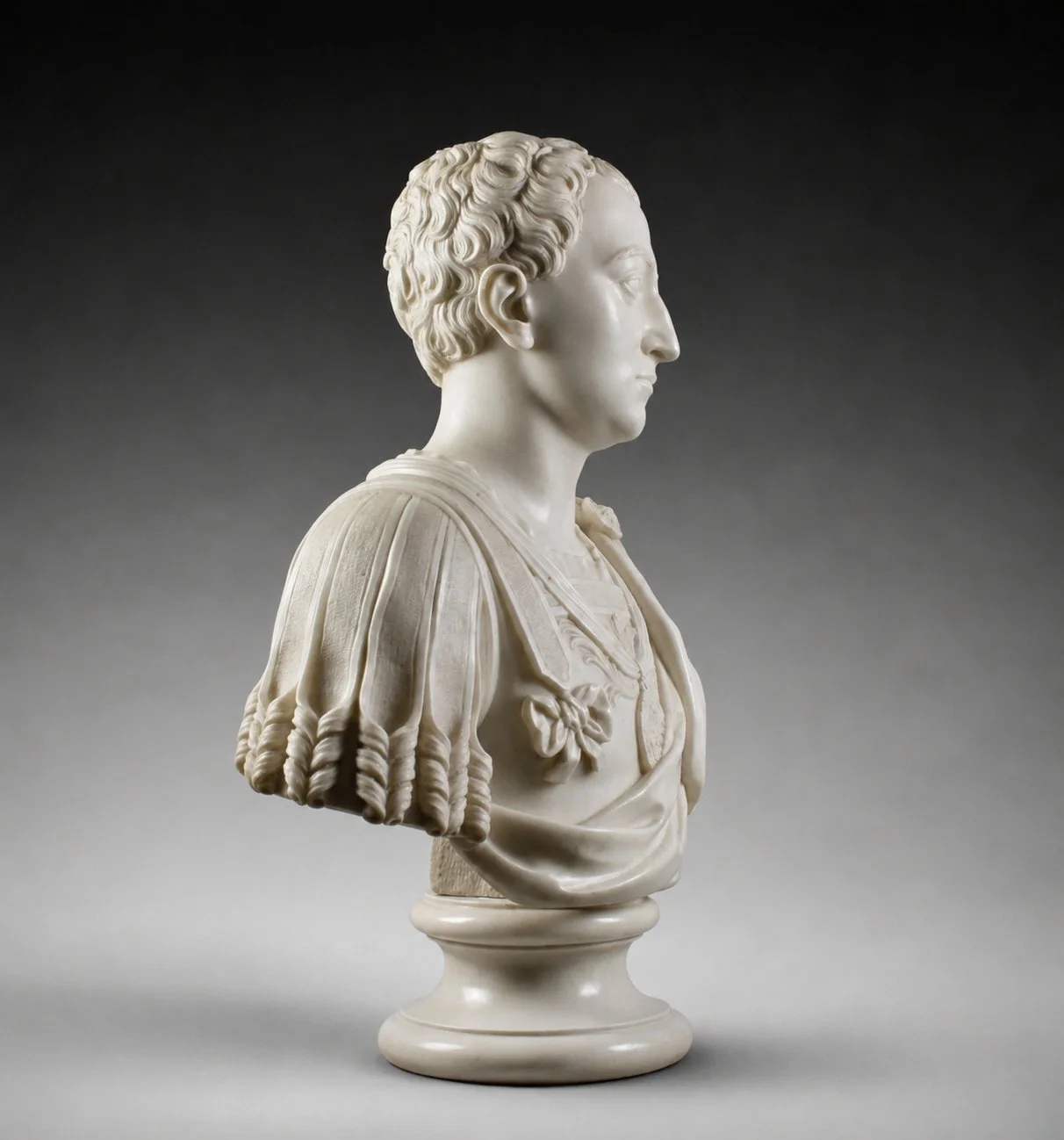 Image 4 of 7
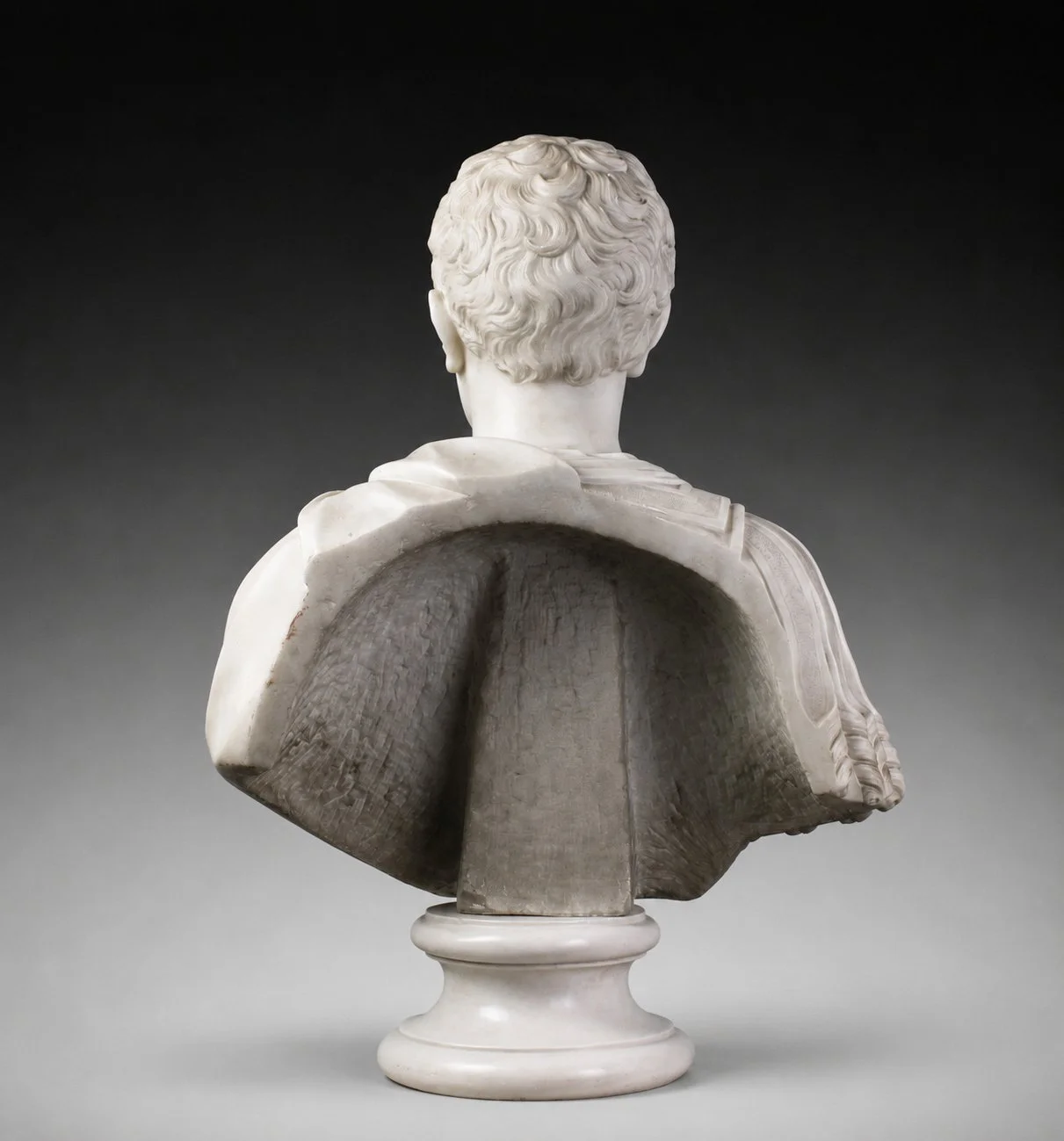 Image 5 of 7
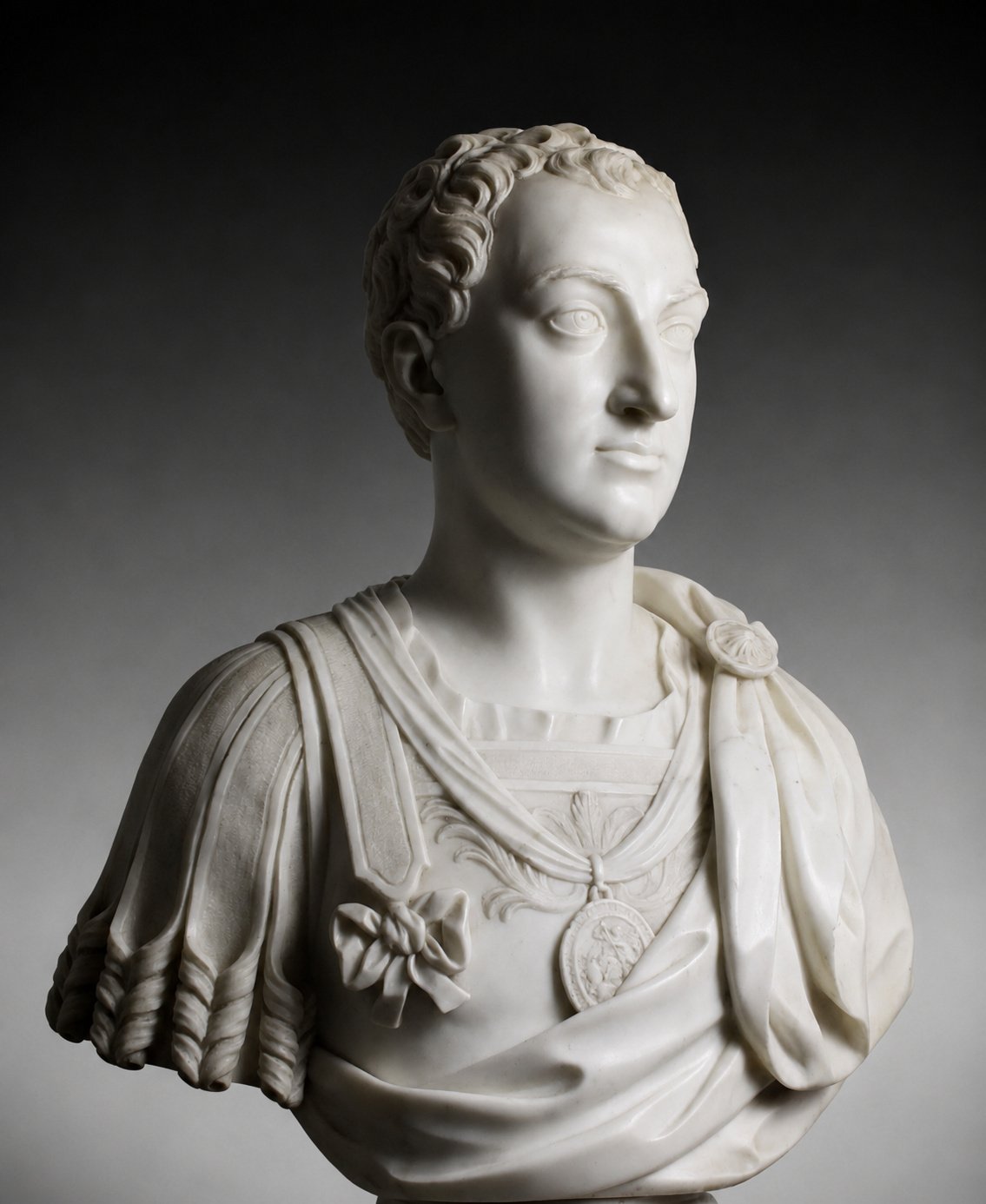 Image 6 of 7
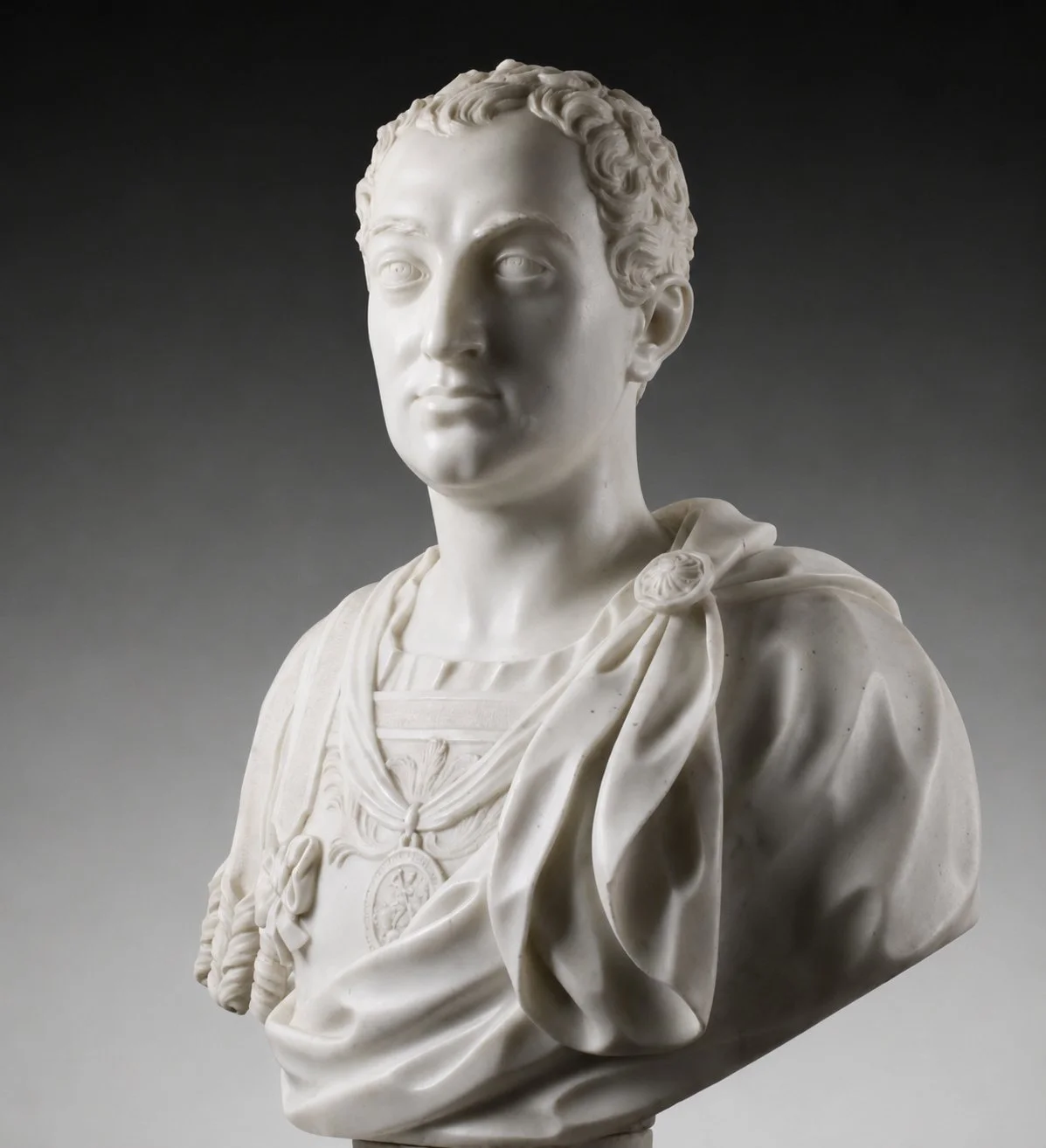 Image 7 of 7